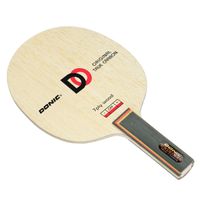
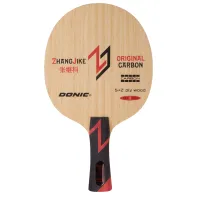
Matchup Overview & Context
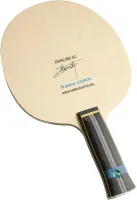
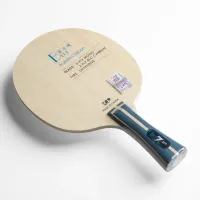
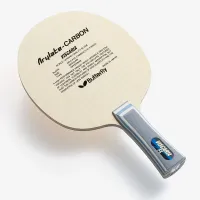
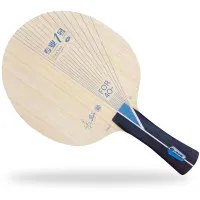
Comparing the Butterfly Zhang Jike ALC and the Friendship/729 Blue ALC pits a legendary, premium Japanese-engineered blade against a modern, ultra-affordable Chinese challenger. Both utilize a 5+2 construction with an outer Arylate-Carbon layout (Koto outer ply over ALC, similar to the iconic Viscaria template), placing them squarely in the offensive speed category. Players cross-shop these two blades when seeking the crisp drive and expanded sweet spot of outer carbon, but they are separated by a massive price gap—roughly ~€180 for the out-of-production Butterfly versus a budget-friendly ~€25 for the Friendship. While the Butterfly targets players demanding refined touch and elite consistency, the Blue ALC appeals to budget-conscious attackers and loopers wanting to experiment with composite performance without breaking the bank.
Weight & Bounce Frequency
Manufacturer specifications state an 86g weight for the Zhang Jike ALC and 85g for the Blue ALC. In real-world samples, the Butterfly tends to hover reliably around 88g with a measured tap-test bounce frequency of 1436 Hz, reflecting a balanced, moderately flexible core. The Blue ALC exhibits noticeably wider manufacturing variance, with community samples ranging from 86g up to a heavy 95g. Its measured frequencies span from 1445 Hz to 1500 Hz, pointing to a stiffer and occasionally head-heavy character depending on the specific copy.
Speed, Feel & Dwell Time
Reviewers consistently praise the Zhang Jike ALC for possessing a softer, more forgiving touch than typical carbon blades, offering exceptional dwell time and a medium-high throw angle that breeds immense confidence. Its vibrational feedback mimics a high-end all-wood blade while retaining crisp carbon acceleration on heavy impacts. Conversely, the Friendship Blue ALC leans slightly stiffer and harder in feel, delivering a more direct and linear response. While some users find the Blue ALC to be a looping machine with a long arc, others note that it can lack ultimate power and control when pushed deep away from the table or when executing flat-out smashes out of position.
Stroke-by-Stroke Consensus
- Short Game & Touch: The Zhang Jike ALC provides exceptional feedback on delicate pushes and service returns, allowing players to keep the ball low with minimal effort. The Blue ALC is similarly capable in touch play, though its slightly higher stiffness requires a softer hand to prevent pop-ups on aggressive short pushes.
- Looping & Topspin: Both blades shine in topspin play. The Butterfly acts as a true spin monster, offering deep ball pocketing for effortless opening loops. The Blue ALC provides a long, reliable arc that helps prevent over-pacing, making heavy topspin rallies fluid and controlled.
- Blocking & Smashing: The Zhang Jike ALC absorbs incoming pace reliably while offering a stable platform for active counters. The Blue ALC excels at passive and active blocking within the first two zones, but reviewers caution that it lacks top-end power for decisive flat smashing away from the table.
- Counter-Play & Mid-Distance: The Butterfly maintains its stability and linear acceleration well into mid-distance exchanges. The Blue ALC performs admirably in the first and second zones, but its energy transfer dips when rallying from deep in the third zone.
Recommended Rubber Pairings
Both blades pair exceptionally well with a wide variety of modern offensive rubbers. For the Zhang Jike ALC, medium-hard spin-elastic tensors like Tenergy 80-FX or Nittaku G-1 maximize its dwell time and medium-high arc, enhancing safety in offensive transitions. For the Friendship Blue ALC, tacky Chinese hybrid rubbers (such as Yinhe Big Dipper) or medium-hard European tensors (like Tenergy 05 Hard or Rozena) complement its direct carbon stiffness, allowing players to drive heavy spin through the ball without sacrificing control.
Target Player & Playstyle
- Butterfly Zhang Jike ALC: Best suited for intermediate to advanced offensive players and loopers who prioritize touch, precise placement, and controlled aggression from mid-distance.
- Friendship/729 Blue ALC: Best suited for budget-conscious club players and developing attackers looking for an accessible, spin-oriented OFF blade to transition into carbon-reinforced equipment.
Verdict & Buying Guidance
Butterfly Zhang Jike ALC
- Pros: Exceptional dwell time and soft touch; elite vibrational feedback; high-end craftsmanship and consistency; highly forgiving sweet spot.
- Cons: Discontinued status makes finding new pieces difficult; very high price point.
Friendship/729 Blue ALC
Pros: Incredible value for money; reliable OFF speed with an enlarged sweet spot; pairs well with various rubber types.
Cons: Noticeable weight and frequency variance between samples; raw finish requiring potential edge sanding or sealing; lacks power deep away from the table.
Choose Butterfly Zhang Jike ALC if: You want a legendary, premium-feeling outer-carbon blade with superior dwell time, soft feedback, and collector value.
Choose Friendship/729 Blue ALC if: You want a high-value, reliable 5+2 composite blade for modern topspin play without spending a fortune.