Matchup Overview & Context
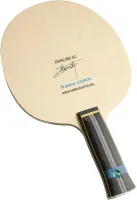
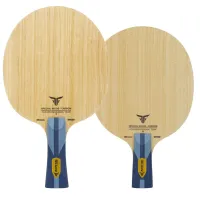
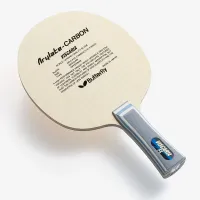
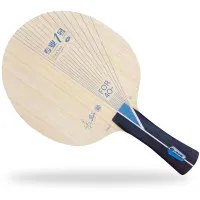
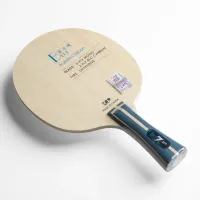
The Butterfly Zhang Jike ALC is an iconic 5+2 composite blade featuring an outer Arylate-Carbon construction akin to the famous Viscaria line, retailing at a premium tier of ~€180. It is compared here against the Loki Telson Speed, an affordable budget alternative that also employs an outer-ALC structure. Players contrast these blades to weigh the superior refinement and quality control of Butterfly against accessible outer-carbon performance for aggressive loopers.
Weight & Bounce Frequency
The Butterfly Zhang Jike ALC has a manufacturer-stated weight of 86g, with sample models typically measuring around 88g. The tap-test bounce frequency registers at 1436 Hz, reflecting a balanced mid-high pitch that indicates a solid yet flexible structure. Precise weight data for the Loki Telson Speed is unavailable, but budget outer-ALC alternatives typically cluster around 85g to 90g with a slightly stiffer initial response.
Speed, Feel & Dwell Time
Reviewers consistently praise the Butterfly Zhang Jike ALC for offering a softer touch and noticeably more dwell time than typical carbon blades. While some users note it delivers ample top-end speed when paired with heavy swings, others emphasize that its defining trait is exceptional feedback and a forgiving feel. The Loki Telson Speed relies on its outer-composite layers to deliver a crisper, more direct rebound aimed at aggressive flat-hitting and fast mid-distance rallies.
Stroke-by-Stroke Consensus
- Short Game & Touch: The Butterfly blade provides exceptional touch on pushes and service returns due to its generous dwell time, whereas the Loki Telson Speed leans toward a more direct response that demands precision to keep short pushes low.
- Looping & Topspin: The Butterfly acts as a spin machine, generating a medium-high arc with high security on opening loops. The Loki Telson Speed prioritizes a flatter, faster trajectory well-suited for European-style power looping.
- Blocking & Smashing: Active and passive blocks feel secure on the Butterfly blade thanks to its stable composite core. The Loki Telson Speed excels in counter-hitting and smashing due to its rigid outer-carbon reaction.
- Counter-Play & Mid-Distance: The Butterfly offers supreme confidence away from the table, allowing players to release the handbrake on counter-loops. The Loki Telson Speed maintains steady linear power during extended mid-distance exchanges.
Recommended Rubber Pairings
The Butterfly Zhang Jike ALC pairs exceptionally well with spin-elastic tensors like Tenergy 80-FX or medium-hard European rubbers, which complement its soft touch and maximize dwell time. For players preferring tacky Chinese rubbers on the forehand, the blade's inherent flexibility provides enough catapult to offset dead-sponge stiffness. The Loki Telson Speed benefits from medium-hard to hard offensive tensors that harness its crisp carbon feedback for explosive put-aways.
Target Player & Playstyle
Suited for intermediate to professional offensive players who loop from both wings and value a blend of speed and touch. The Butterfly model caters to modern attackers who want exceptional dwell time for heavy topspin generation without sacrificing control in the short game, while the Loki model targets budget-conscious attackers seeking straightforward carbon speed.
Verdict & Buying Guidance
- Butterfly Zhang Jike ALC Pros: Outstanding touch and feel, generous dwell time for a carbon blade, high-end finishing quality, highly adaptable across different playstyles.
- Butterfly Zhang Jike ALC Cons: High premium price point, limited availability due to production status.
- Loki Telson Speed Pros: Highly affordable entry point into outer-ALC performance, direct power delivery.
- Loki Telson Speed Cons: Lacks the refined acoustic feedback and nuanced touch of premium Butterfly engineering.
Choose the Butterfly Zhang Jike ALC if you want a top-tier, player-proven outer-carbon blade with exceptional dwell time and a softer feel.
Choose the Loki Telson Speed if you want an economical outer-ALC blade geared toward direct, uncompromising offensive play.