Stiga Intensity NCT Carbon
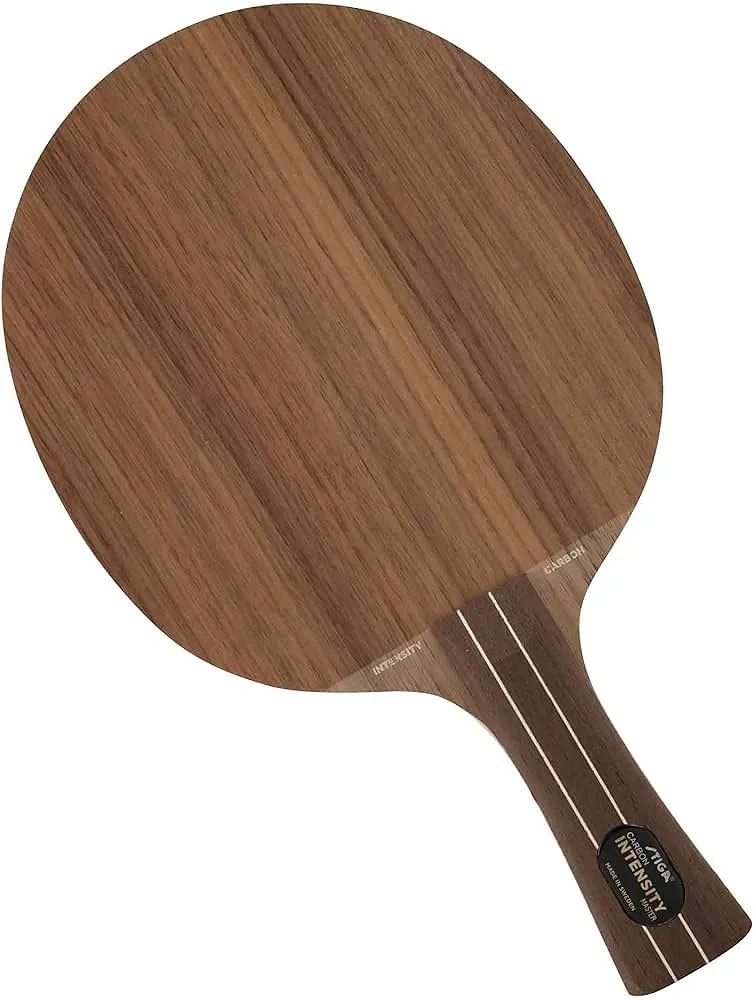
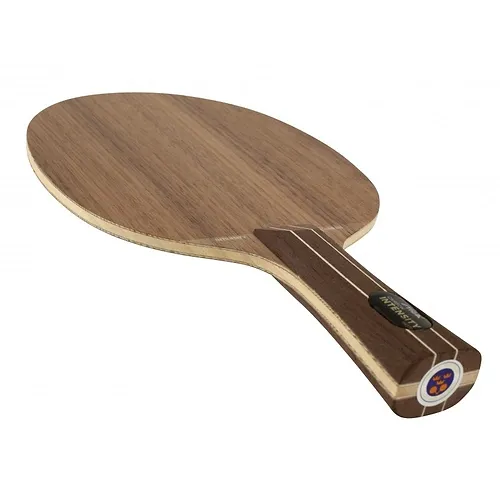
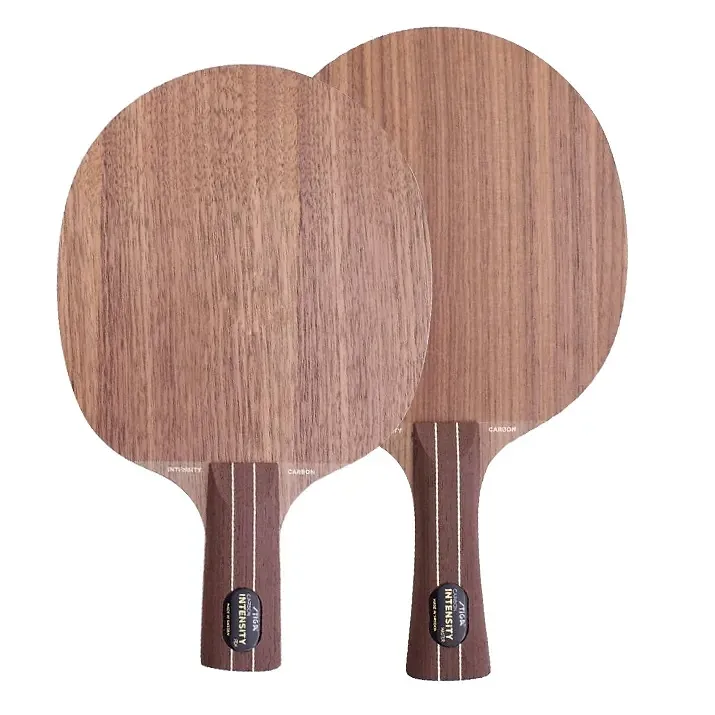
Blade description
The Stiga Intensity Carbon is a composite blade featuring a 5+2 construction. It is designed for offensive play, characterized by a balance of speed and stability without reaching an excessive OFF+ level. The ultra-thin carbon layers provide increased stability and a wider sweet spot compared to all-wood alternatives, while maintaining enough flexibility to offer tactile feedback and vibration.
Playing Characteristics
- Feel and Dwell: The blade is noted for its dwell time, which facilitates high-quality topspin loops and provides a reliable, predictable touch during rally exchanges. It is not overly stiff, allowing players to sense the ball, which aids in short-game control and service manipulation.
- Weight and Handling: The construction is generally considered light, though users have reported that the handle edges can be sharp upon purchase and may require light sanding for comfort. The balance and shape provide a consistent experience, particularly for players who rely on precision and shot placement.
- Performance: It excels in both offensive drives and technical short games, such as spin-variation serves and flicking. While it is stable enough to minimize errors on off-center hits, it rewards accurate technique with high predictability and trajectory control.
Submit a Review
Recent Reviews
#1 — April 2024
Very satisfied, suits my style. Short game satisfying. Flat hits have assisted my game marginally. Opponents commended my short game. There was a great percentage of misconception perceived by players receiving my serves whilst using this blade also.
I felt that I had great control in serve game and a vast variety of spin/ no spin serves at my disposal. This blade assisted me in tricking my opponent at different sections of play in the game. I found that I was able to trick players at the serve (spin/ no spin), “appear” to be accelerating spin on rally exchanges, and keep the ball marginally shorter after receiving half long serves.
These were highlight moments using this blade. Some similar experiences to when I used YEO. From what I can recall from YEO experiences, I feel that the benefits of this blade are:
1. Slight increase in speed 2. Light weight blade
Negatives:
1. Spin.
All things considered, for my style, this blade set up is what I seek. Stay forward, TT enthusiasts.
#2 — July 2019
In the latest, I come from using Friendship 729 V6 & L3 blades. I have now bought this Stiga Intensity NCT Carbon.
I started using it with DHS Skyline TG2 NEO/DHS Tinarc 3. The speed is a bit higher in this blade, and control is fine. It works well brush looping on forehand, but my backhand is a bit harder to get the top spins to work properly.
I think the blade is a little bit too bouncy for me, and it’s a little heavier than my Friendship blades. Compared to other concave handles, this one isn’t fitting my hand exactly.
I have to struggle a bit to get a good grip when I play. I had a Stiga Hans Alser (large concave), Stiga Erik Lindh (quite straight), and these Friendship blades (concave). I have no problem with any of them, only this Stiga Intensity NCT Carbon. Therefore, I have now returned to my Friendship 729 V6 blade again. It’s a bit slower, lighter, and gives me a better grip and better control.
#3 — November 2018
My perfect blade for me as of now. Fantastic! Now, I can beat those higher level players in our club using this perfect blade that I couldn’t beat before.
Get Notified of New Equipment and Reviews
༼ つ ◕_◕ ༽つ No spam or other useless stuff. We plan to send out some newsletters from time to time with the latest reviews and project updates. Feel free to unsubscribe at any time.